Women’s rights groups have issued a call to “change the narrative”, as disinformation about violence against women and girls (VAWG) continues to be used as “a tool for political point scoring”.
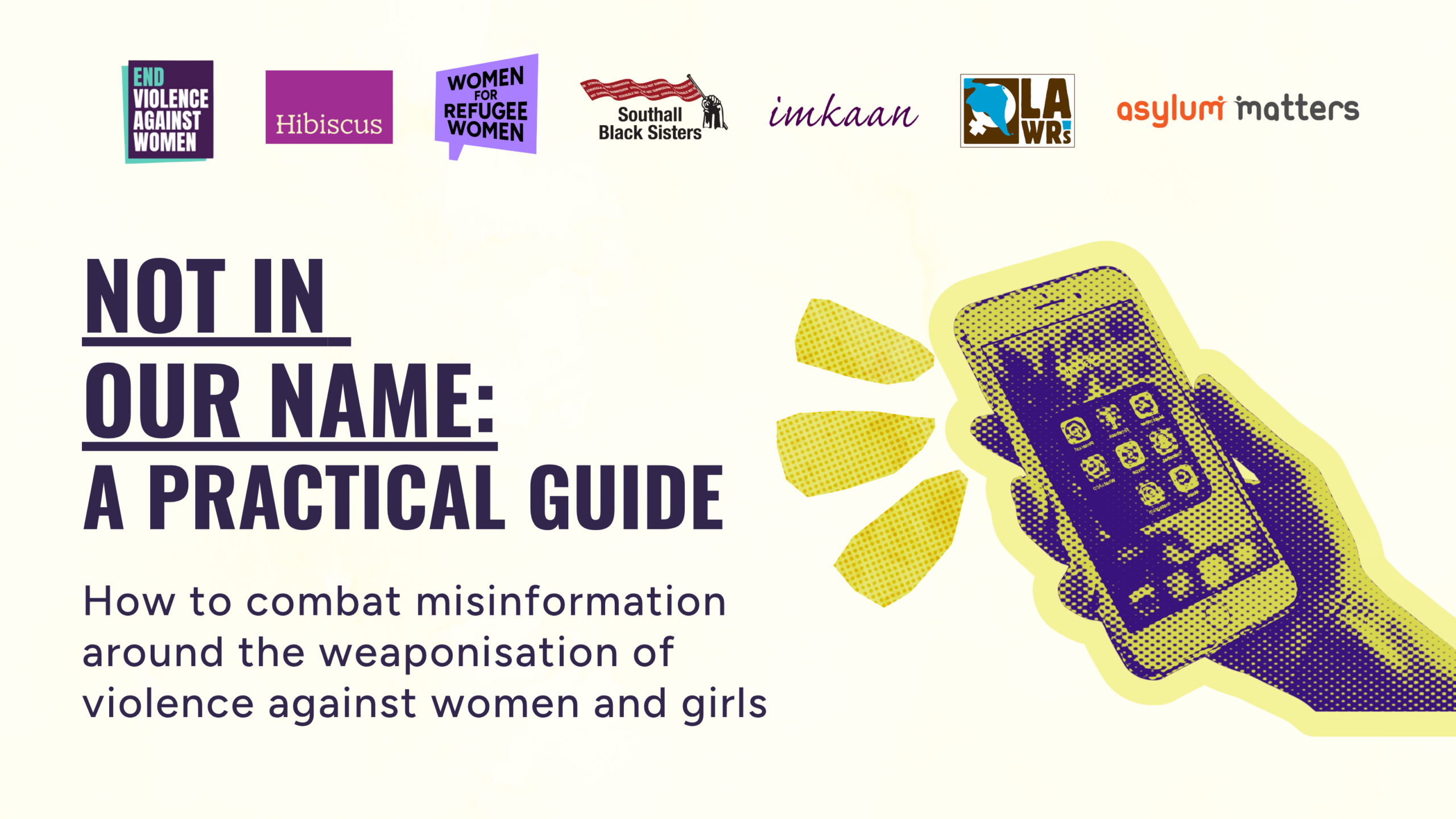
Campaigners say the use of arguments about VAWG to promote anti-migration agendas is “nothing new”, but its impact is becoming more mainstream and “devastating”. Now, a new guide, produced by End Violence Against Women Coalition, Hibiscus, Women for Refugee Women, Southall Black Sisters, Imkaan and the Latin American Women’s Rights Service, aims to help the public, politicians and journalists respond to those who use false or misleading claims about violence against women to stoke division for political gain.
At Asylum Matters, we’ve been proud to work with these organisations to support the launch of this guide, which is led by the people who know what’s really needed to end violence against women and girls. They tell us that scapegoating people seeking sanctuary, and other people who’ve moved to the UK, not only isn’t what’s needed, it actively impedes the vital work of ending VAWG, by reinforcing ‘stranger danger’ myths, distracting public attention from the real solutions, and increasing the risk of harm to Black, minoritised and migrant women. Anyone who genuinely cares about the vital work to end this violence must listen to these expert voices.
We want to help people engage in good faith, persuasive conversations with people who’ve been exposed to mis- and dis-information about VAWG, and provide a tool to push back against those who deliberate weaponise this important issue.
The guide provides tools for people to challenge harmful falsehoods and to have productive conversations with the people in their lives about VAWG and immigration. It urges people to unite over shared positive values in order to tell a more honest story, helping people to understand the real causes of, and solutions to, gendered violence.
Janaya Walker, Interim Director of the End Violence Against Women Coalition (EVAW), said: “The public overwhelmingly cares about ending violence against women and girls. But this concern has been increasingly exploited by those who promote misinformation and stoke fear and division in our communities.
“To those figures, which includes politicians, organisations on the frontlines of tackling violence against women and girls say ‘not in our name’.
“Ending violence against women and girls is everyone’s responsibility, and we can all take small, everyday actions to get us there. This guide is designed to help us do just that. It offers practical advice to challenge misinformation, move conversations away from harmful narratives and towards a better world for all women and girls.”