On Monday, the Home Secretary announced a radical overhaul of the UK’s refugee protection system. The Government itself has called these changes the most significant change to the asylum system since the Second World War: this is true. In fact, this new attack on asylum rights puts the very principles of humanitarian protection, established after the horrors the world witnessed during the Second World War, under threat.
Here’s a summary of the new announcements:
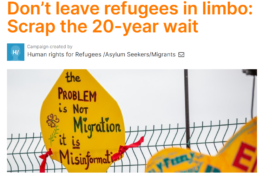
- Decades of limbo for refugees: People granted refugee status will have their right to stay in the country reviewed every 30 months. Not only will this create hugely expensive bureaucracy, it will leave people in terrifying limbo, which will make it harder to work, rent, study or integrate into their new communities. Refugees will have to wait 20 years for settled status – making it impossible for people to start rebuilding their lives. This can be shortened for those who can work or study and pay a fee.
- ‘Fast track deportations’ and restricted appeals: People seeking asylum will only be allowed one appeal, and will face deportation if that fails. There will be a greater push to expand returns agreements and visa penalties for those countries that resist.
- Enforced removals of families with children: Families will have their support and accommodation taken from them if they do not comply with removals, something that was legislated for in the 2016 Immigration Act but then abandoned. The government has signalled that enforced removals to Syria and Albania are expected to begin soon.
- ‘High value items’ removed from sanctuary seekers: The possessions sanctuary seekers manage to bring with them from home will be reviewed, and could be removed from people to contribute to the costs of accommodation. People who’ve already lost homes, families and everything familiar could be stripped of what little they have – although the Home Office has now denied that ‘family heirlooms’ will be taken from people.
- Asylum support duty revoked: The statutory duty to provide asylum support, including accommodation, to those who would otherwise face destitution, is set to be revoked, meaning it could be denied to people. The reasons why support could be denied are; if people can work (having been granted permission to work by the Home Office) but don’t; if they work illegally; if people don’t comply with removal directions or if they commit crimes.
- Two-tier support system: Under these plans, while refugees would still have access to public funds, the Government has said it will consult on measures that could mean people have to meet additional requirements to receive and retain benefits – effectively making recognised refugees second-class citizens in the UK.
- Family reunion curbed: Making family reunion harder and more limited for most families, which will force more women and children to have to risk unsafe, irregular routes, or keep families apart for years.
- “Modest” new safe routes to be created: These will be based on community sponsorship, similar to the Homes For Ukraine Scheme. The government will create a new route for displaced students, and another for skilled refugees to work. The numbers of people accepted through such schemes would be capped.
- Vital human rights law under attack: Article 3 and Article 8 of the European Convention on Human Rights, which protect people from torture and inhuman or degrading treatment, and the right to family life will be reinterpreted. Legislation will also be brought forward to overhaul the Modern Slavery Act.
- Possible changes to working rights policies: “The government expects those who are arriving or returning to the UK to seek work. To encourage this, we are now exploring a change to taxpayer-funded benefits to prioritise access for those who are making an economic contribution to the UK. This could see additional criteria that migrants have to meet to receive benefits and actions they need to take in order not to lose them. A consultation on this question will take place in 2026.” This could signal the Government’s intentions to ease working restrictions on people seeking asylum – but in a manner that weaponises work and penalises those who do not or cannot work. The Lift the Ban coalition have published a statement on this here.
- Moving people to camps and barracks: In its efforts to close down hotels being used for emergency asylum accommodation, the Government has committed to “a move towards the use of large sites, including military sites”, having already announced new camps at Cameron Barracks in Inverness and Crowborough Training Camp in Sussex.
It’s very clear: these anti-refugee laws must be resisted. The Government is bowing to the hostility and hatred stirred by a minority of extremists.
The fight for asylum rights is now more urgent than ever.
Nathan Phillips, Head of Campaigns at Asylum Matters, said:
“Under this Government, the fundamental principle of protection for refugees, put in place after the horrors of the Second World War, are now under more threat than they’ve ever been.
“Just a week after the Prime Minister expressed fears about racist rhetoric tearing Britain apart, his Government is proposing radical anti-refugee laws that can only be an attempt to placate extremists.
“Most Brits, whatever their concerns about the asylum system, don’t want survivors of war or torture to be left in limbo for 20 years, unable to settle or integrate, facing threats to be sent back to the countries they fled every two years.
“After slamming shut one of the last remaining safe and regularised routes by suspending family reunification, these plans now further punish those who flee here irregularly, despite this often being the only means available.
“The Home Secretary has hinted at new regularised routes, and whilst we look forward to seeing the detail of these, we know family reunion is being curbed. We know this will mean more women and children risking their lives in the Channel – and then facing demonisation and punishment for having been forced to arrive irregularly.
“The UK currently hosts less than 1% of the world’s refugees: reducing our support to ‘modest’ safe routes for a few is shirking our international responsibilities. And any such routes are worth little if refugees are to be treated as second class citizens, faced with constant hostility and scrutiny even after their need for protection has been established.
“These plans also completely misunderstand why people seek sanctuary. Most people have no idea exactly what the refugee laws in the country they’re fleeing to are. They come for family ties, for a common language, for an understanding of the culture, and first and foremost for safety. That’s why these policies will fail on their own terms, while abandoning those who’ve asked for this country’s protection to decades of limbo and terror. They cannot be allowed to go ahead.”