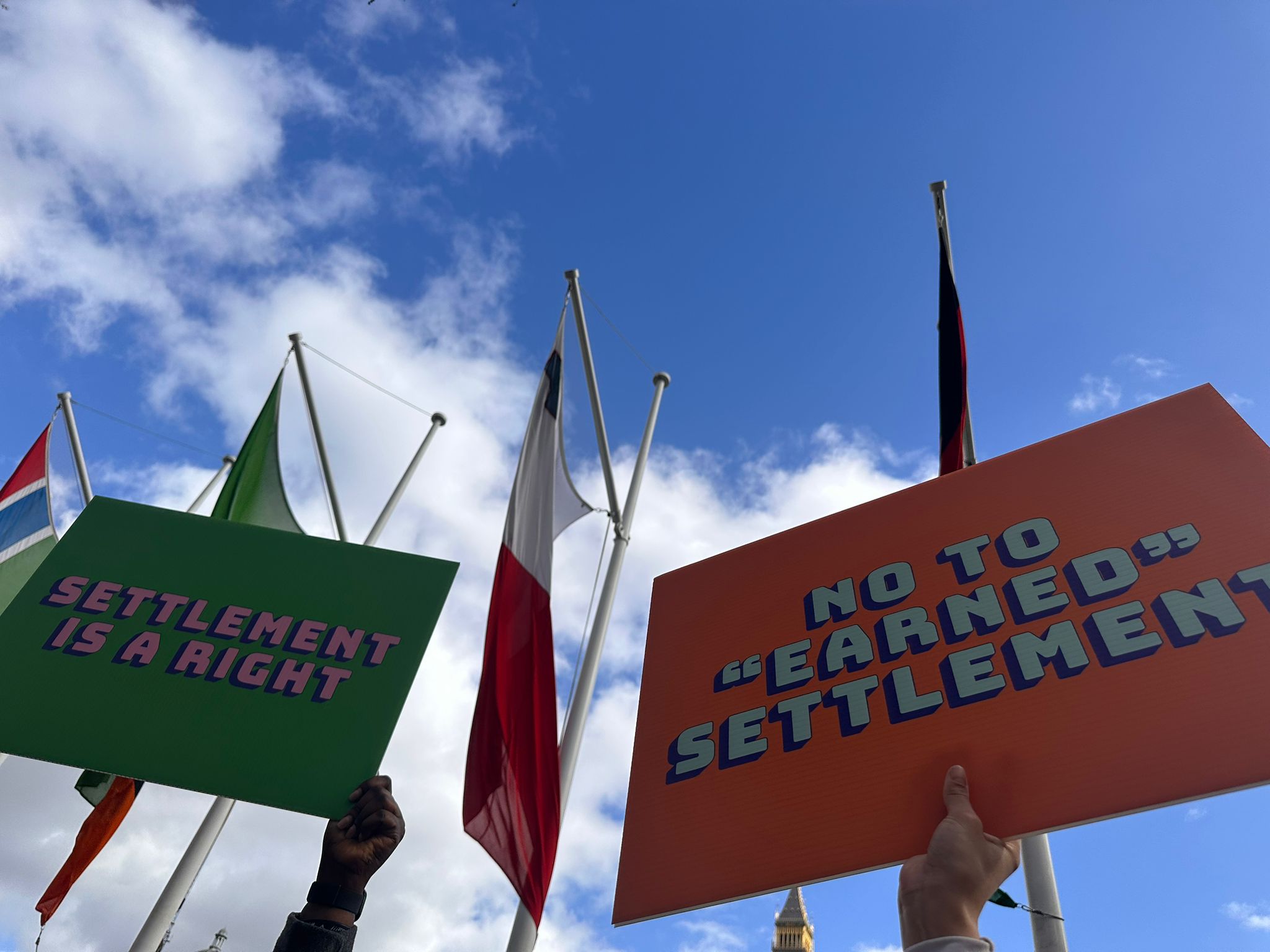
On Monday, the Home Secretary unveiled its ‘Earned Settlement’ policy. The plan will see most migrants wait 10 years before they can apply for settlement in the UK – while some refugees could wait as long as 30 years. It will see the people who earn the most offered the chance to buy their way into belonging, while those who are sick or disabled and unable to work could be shut out of secure settlement permanently.
In its initial proposals, launched last year, the Government had indicated that those who wanted to earn settlement would be expected to “volunteer in their community”. Along with hundreds of other charities, we pushed back against this abhorrent and impractical idea, which would have conscripted people into doing unpaid work to “earn” their place in the UK. While it’s good news that this abhorrent idea has been dropped, the policy that has been published remains damaging, dangerous and utterly counterproductive.
According to the Government’s own figures, more than 200,000 people responded to its Earned Settlement consultation. Many of them were migrants and refugees who expressed clearly just how devastating these plans would be for them. 84% of individuals and 79% of organisations disagreed with the plans. The Government itself highlighted how many respondents pointed out how “unfair” the proposal was.
These responses were ignored.
The Government chose to press ahead with a policy that will lead to homelessness, poverty and decades of limbo for people simply trying to build lives in the UK. It will leave people in limbo, struggling to get good quality jobs or secure housing, and may lead to people avoiding vital support services, including healthcare, for fear of running up a Government debt that could deny them settlement. The existing 10-year settlement route has already been shown to drive child poverty – expanding it will only lead to more children growing up in poverty.
Earned Settlement is a policy filled with contradictions. Anyone applying to settle is punished with a longer wait if they have failed to work during their stay. Yet the Government maintains its irrational ban on working while waiting for an asylum decision – making it much harder for those who’ve been granted refugee status to return to employment after a long and traumatising period refused the right to work.
Refugees are punished for not using “safe and legal routes” into the country. Yet these routes remain practically non-existent. The Government still hasn’t resumed Family Reunion – one of the most important safe routes into this country, used primarily by women and children whose male family members have been granted refugee status. It closed the Afghan resettlement scheme. It refused to allow student visas to people from a number of countries where students had been found to claim asylum after travelling safely on student visas.
Just last week, the Home Office unveiled a new so-called safe route: its Named Community Sponsorship route. Refugees using this route will wait five years to apply for settlement and will be able to work and start rebuilding their lives. But these routes are capped, incredibly limited in number, and will only be offered to refugees on specific work or study routes or those who are picked out by groups offering sponsorship. In effect, this means a situation of ‘picking and choosing’ refugees which will benefit only a handful of people and inevitably exclude the most vulnerable refugees for which mainstream refugee resettlement schemes and family visas are key lifelines. Without these there are few meaningfully accessible safe routes.
So the “safe and legal” routes the Government boasts about barely exist – yet it still proposes to punish people for not using them.
Here’s are the most important things to know about the Earned Settlement plan:
For refugees, the proposed waits for settlement are:
- 5 years: those who arrive on Government-approved routes (at present, these are limited to the newly-announced Named Community Sponsorship and study routes, along with the existing resettlement schemes).
- 10 years: those who did not arrive by small boat and have entered work or study
- 20 years: those who did not arrive by small boat and have not entered work or study
- 20 years: those who arrived by small boat and have entered work or study
- 30 years: those who arrived by small boat and have not entered work or study
For other migrants the timelines are:
- 3 years: additional rate taxpayers earning over £125,141, and the highly skilled on routes such as Global Talent and Innovator Founder.
- 5 years: higher rate taxpayers earning over £50,271, and certain public service workers such as doctors, nurses and teachers.
- 10 years: The new standard route.
- 20 years: anyone who claims certain benefits while in the UK or commits a visa offence.
To gain settlement after their wait, people will be expected to prove they have:
- No criminal record
- English equivalent to A-Level English as a foreign language
- No debt to the Government
- A record of National Insurance contributions – meaning people will have to have worked or paid voluntary contributions to National Insurance
Aside from the decades of limbo these plans force people into, the new barriers to settlement after the wait could also shut many people out for good. People in the asylum system face significant barriers to ESOL language education – making the high-level English language requirement difficult for many to meet. In a country which already disproportionately criminalises and over polices racialised people, denying settlement to anyone with any level of criminal record – as opposed to the previous threshold, which refused settlement to anyone who had received a 12-month suspended sentence or worse – further bakes racial injustice into our courts system. And, by maintaining the work ban that pushes people seeking sanctuary towards exploitative, irregular work that can lead to them being criminalised, and then threatening to further punish people criminalised in this way by denying settlement, the Government is setting an impossible trap for many refugees.
Earned settlement is an injustice
20 or 30 years is a life sentence. We cannot allow refugees to wait decades for safety, all while having to re-prove their need for safety every 30 months. It’s impossible to calculate the immense human cost of these plans – while the financial impact on a Home Office which already leaves people waiting years for an asylum decision of having to process this new raft of decisions would be immense.
We must continue to fight these damaging plans. This petition, set up by refugees in the West Midlands who would be directly affected, calls on the Government to scrap the decades-long limbo.
Please sign and share it now:
Don’t leave refugees in limbo: Scrap the 20-year wait | 38 Degrees